PART 1: The DSM

Why every therapist’s practice is shaped by a system they were never truly taught to question
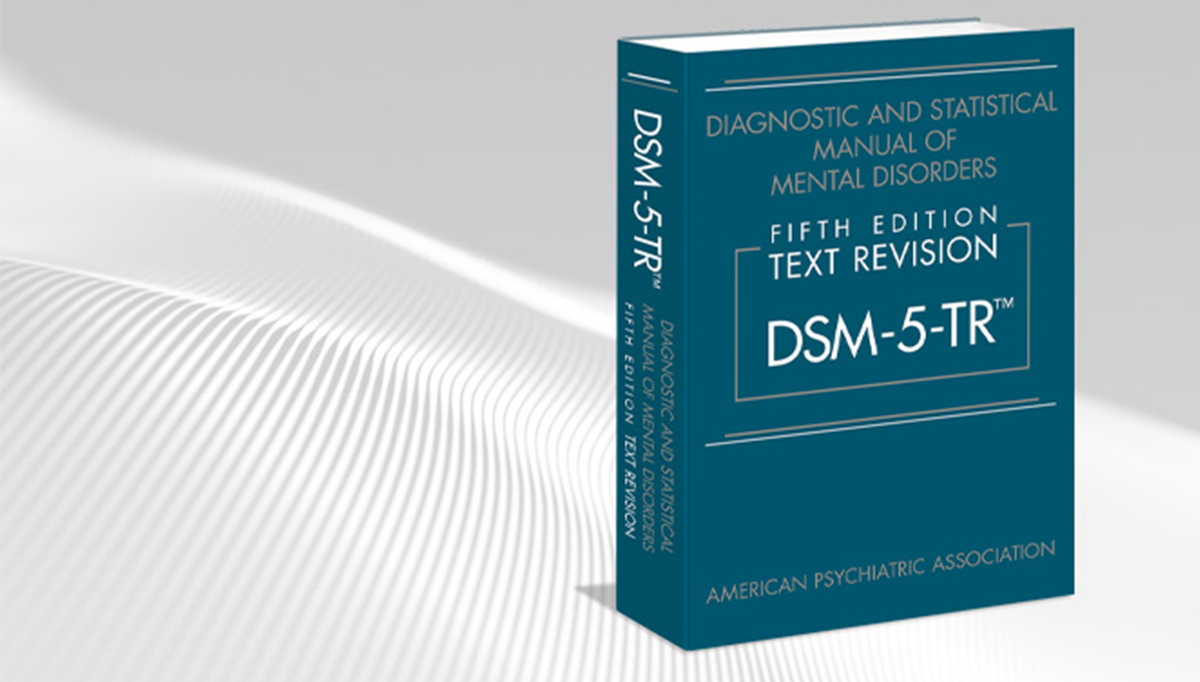
If you’re a therapist, counselor, social worker, or coach, there’s a good chance you don’t lean heavily on the Diagnostic and Statistical Manual of Mental Disorders (DSM) in your actual day-to-day work.
Many clinicians say things like:
“I don’t really diagnose.”
“I focus on relationship, not labels.”
“I only use the DSM because insurance forces me to.”
“It doesn’t influence how I see my clients.”
I used to think the same.
But after digging into the history, politics, and real-world impact of the DSM—and the research on how diagnosis shapes clinical encounters—I realized something unsettling: Even if I never open the DSM, it still shapes me as a clinician.
A lot.
In Between Stories, I write about how we live inside inherited narratives—some that help us make meaning, and others that quietly organize our lives without our consent, and often, our awareness. The DSM is one of the most powerful story systems shaping modern mental health care.
Here’s how.
It shaped your training long before you ever met a client.
For decades, therapists have been trained to think in categories:
- depressive vs. anxious
- disorder vs. normal
This isn’t neutral.
The DSM teaches us that mental suffering is best understood through classification—a particular story about what distress is and how it should be organized. That story enters our thinking even when we do not consciously use the manual.
Most of us were never taught that DSM categories were shaped by political bargaining, institutional survival strategies, insurance demands, and even pharmaceutical markets (Mayes & Horwitz, 2005; Cosgrove & Krimsky, 2012).
But those forces still shaped the frameworks we internalized.
It structures how organizations define “real” problems.
Even if you personally avoid labels, your agency or system probably doesn’t.
- Intake forms mirror DSM language.
- EHRs (Electronic Health Records) prompt DSM-aligned symptoms.
- Treatment plans require “diagnostic justification.”
And to my understanding, DSM diagnoses are required in case presentations for most clinical training programs in the United States.
Behind this infrastructure sits the professional authority of the
American Psychiatric Association, the organization that authors and governs the DSM.
This has consequences.
Clinicians learn—often unconsciously—that certain kinds of distress count, and others do not.
A person’s grief, oppression, neurodivergence, sensory overwhelm, burnout, or social isolation often must be reframed to fit a DSM-shaped category before systems will take it seriously.
It seeps into how we conceptualize clients.
Research shows that even when clinicians believe they are being relational or contextual, diagnosis still subtly influences:
- what questions they ask
- what they write in notes
- what they pay attention to
- how they interpret behavior
- and what they assume is possible
(Halpin, 2016; Maynard & Turowetz, 2017).
In intake sessions, clinicians gather complex stories, but documentation often requires reorganizing those stories into DSM-aligned patterns (Nakash et al., 2015). Over time, that requirement shapes how we hear people in the first place.
This is not malicious on the clinician’s part but it is structural.
It affects your clients’ identities and expectations.
Even when delivered gently, a diagnosis can:
- offer relief and language,
- and/or subtly narrow a client’s sense of possibility.
Young people, especially, report that diagnoses shape how they see themselves, what they believe they can achieve, and how others relate to them (O’Connor et al., 2018; Pérez-Corrales et al., 2019).
A DSM category can become an identity. It can unlock resources that would otherwise be gatekept. Or it can quietly become a cage.
In narrative terms, diagnosis is not just information. It becomes an imposed story that follows clients into schools, workplaces, healthcare systems, and families.
It influences what outcomes are valued.
The DSM’s logic trains systems to prioritize:
- symptom reduction
- functional improvement
- risk management
- compliance
But research on flourishing (VanderWeele, 2017; Pellicano et al., 2023) shows people want:
- belonging
- autonomy
- safety
- meaning
- community
- dignity
- agency
- joy
Those are not DSM outcomes.
Nothing in the DSM helps us ask whether a client is flourishing.
And it gives us very little language for asking how flourishing might be supported in a person’s actual social, cultural, and material world.
So what do we do with this?
If we take seriously the idea that mental health practice is shaped by powerful inherited stories, then the work is not simply to use the DSM more carefully.
It is to become more conscious of how deeply its narrative logic organizes our field.
Here is where we can start:
- Name the history we weren’t taught.
- Question the assumptions built into diagnostic culture.
- Teach trainees how to think beyond categories.
- Center flourishing as the real goal.
- Advocate for systems that support narrative, context, and ecological fit—not just codes.
The DSM will continue to influence mental health globally. But we still have a choice about whether it quietly guides our work…
…or whether we learn to practice between stories—between the diagnostic narratives our systems demand and the fuller, more complex stories our clients are still trying to write about their own lives.
This is the first installment in my series on the historical realities and present-day legacies of the DSM—and what a flourishing-centered, justice-oriented mental health model might look like for clinicians, clients, and communities.