PART 4: The DSM
Beyond Diagnosis: How the DSM Shapes Mental Health Practice—and What Clinicians Are Not Taught
Beyond Diagnosis: How the DSM Shapes Mental Health Practice—and What Clinicians Are Not Taught
Why clinicians must understand—and explain—the systems they use
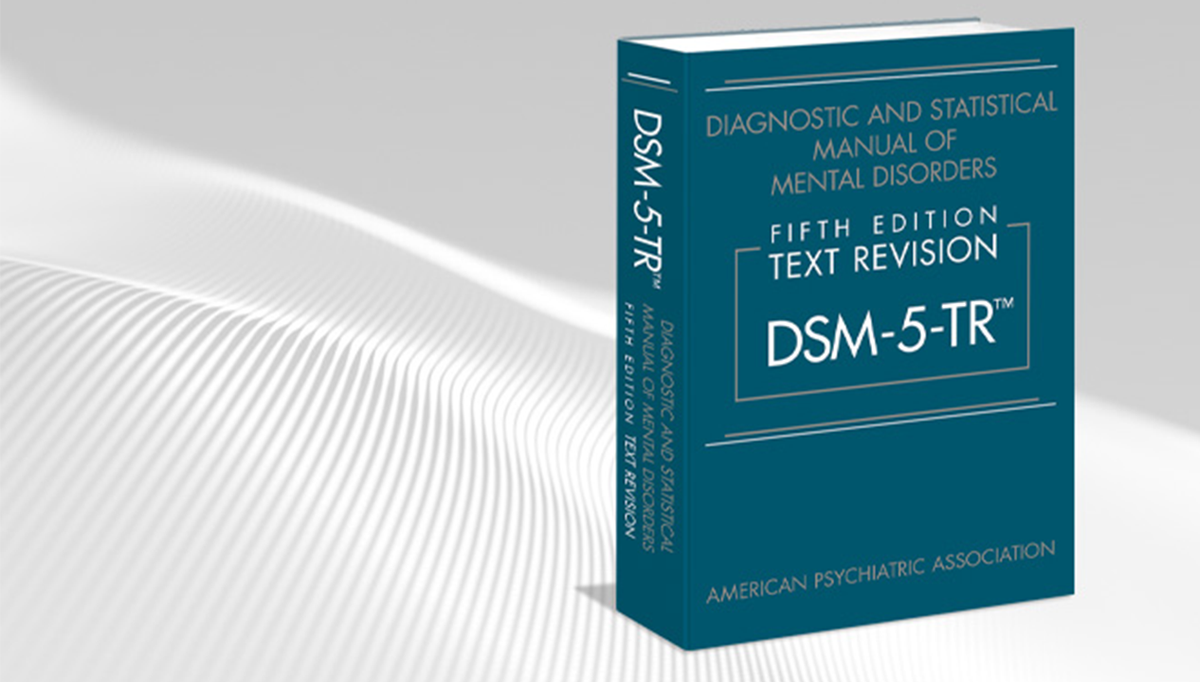
For many clinicians, questioning the DSM can feel uncomfortable. The Diagnostic and Statistical Manual of Mental Disorders is deeply embedded in nearly every aspect of the mental health system. Graduate training programs introduce it to many different kinds of clinicians. Research studies are organized around its categories. Clinical documentation, insurance reimbursement, and treatment authorization often depend on it. In this sense, the DSM functions not simply as a clinical guide, but as the institutional core of modern mental health care. This level of integration makes critique difficult because so much of the field is organized around it. To question the DSM is, in many ways, to question the entire foundation of the structures through which mental health knowledge is produced, validated, and applied in the United States.
Part 3 of this series traced how the DSM came to occupy this role: a system designed to improve diagnostic reliability that became deeply embedded in administrative systems, research practices, and clinical training. The result is not just a classification tool, but a framework that quietly shapes how distress is defined, studied, and treated. The question that follows is not whether the DSM has uses—it clearly does. The question is what happens when a classification system becomes a structural gatekeeper in the field, shaping access to care, research, and institutional legitimacy—even when clinicians themselves understand distress in more complex and nuanced ways.
Diagnosis and the Shaping of Clinical Perception
Diagnostic systems do more than organize information—they organize perception. Once a person receives a diagnostic label, it begins to structure how their experiences are interpreted. Emotions, behaviors, and relational patterns are filtered through the expectations associated with a particular category (Kirk & Kutchins, 1992). Over time, the diagnosis can function as an explanatory shorthand, shaping both clinical judgment and client self-understanding (Kirk & Kutchins, 1992). Sociologists have described this process as reification—the tendency for abstract classifications to be treated as though they were concrete entities (Kirk & Kutchins, 1992).
This is not simply a conceptual issue. When diagnostic categories are reified, distress is more readily located within individuals, even when it emerges from relational, cultural, or structural conditions. Trauma can be reframed as disorder, and social or relational harms can be interpreted as dysfunction within the individual—reflecting longstanding concerns that diagnostic systems individualize distress and obscure context (Levine & Ghezzi, 2022; Timimi, 2014). Diagnosis, in this way, does not merely describe distress—it actively organizes it. It directs attention toward some explanations while making others less visible.
Many contemporary therapeutic approaches push against this narrowing. Trauma-informed models foreground overwhelming experience. Relational and attachment-based approaches emphasize connection. Liberation psychology and feminist therapy center power and social context. Across these perspectives, a consistent insight emerges: distress is not reducible to individual pathology.
The DSM as a Research and Cultural Infrastructure
The influence of the DSM extends far beyond individual clinical encounters. It structures how knowledge about mental health is produced. Most psychiatric research recruits participants based on DSM diagnoses, tests interventions for DSM-defined categories, and reports findings within DSM terminology (Insel et al., 2010). This creates a self-reinforcing dynamic, in which categories shape research design and findings are often interpreted within those same diagnostic frameworks (Insel et al., 2010).
Over time, this process stabilizes the DSM not just as a tool for classification but as a conceptual foundation for mental health. It plays a significant role in shaping what kinds of research questions are asked, what evidence is generated, and how findings are interpreted. In response, some researchers have begun to move away from diagnosis as the primary unit of analysis. Process-based approaches focus instead on underlying mechanisms—such as avoidance, emotional regulation, and cognitive flexibility—that cut across diagnostic categories (Hofmann & Hayes, 2019). This work suggests that many clinically relevant patterns are not disorder-specific, but instead transdiagnostic (Hofmann & Hayes, 2019). This represents a meaningful shift: from organizing treatment around categories to organizing it around processes, and from asking “What disorder is this?” to asking “What maintains this pattern, and how can it change?”
At the same time, the DSM shapes cultural narratives about mental health. It frames distress primarily as internal dysfunction, measured through symptom checklists. But much of human suffering does not fit neatly within this frame. Grief, moral injury, relational rupture, cultural conflict, and structural injustice are not easily reducible to diagnostic categories but deeply shape human experience. When DSM language dominates, these forms of distress are often translated into pathology rather than understood on their own terms.
Working With Diagnosis More Intentionally
Given its institutional role, diagnosis is not easily set aside, but it can be engaged more deliberately. One shift is to treat diagnosis as a limited and context-dependent tool. This requires recognizing both what diagnosis can do and what it cannot. Another shift is to prioritize case formulation over categorization. Formulation asks how distress has developed, what functions it serves, and how it is sustained within a person’s life. It integrates history, relationships, context, and meaning in ways that diagnostic labels cannot.
In practice, this means listening for patterns rather than fitting experiences into predefined categories. It means asking how distress operates—what it protects, expresses, or makes possible—rather than assuming it reflects an underlying disorder. Process-based approaches reinforce this orientation by focusing on mechanisms of change rather than diagnosis-specific treatments (Hofmann & Hayes, 2019). Similarly, frameworks such as the Power Threat Meaning Framework center questions of power, threat, and meaning-making (Johnstone & Boyle, 2018). These approaches do not simply supplement diagnosis—they shift the level of analysis.
Imagining Mental Health Systems Beyond Diagnosis
The persistence of diagnosis is not only a clinical issue, but a structural one. Insurance reimbursement, treatment authorization, and documentation requirements all depend on diagnostic classification. As a result, diagnosis functions as a gateway to care (Kirk & Kutchins, 1992; Levine & Ghezzi, 2022). This raises a broader question: why is classification the primary way mental health systems are organized? This is a question I will tackle more fully in my next installment but alternative models suggest other possibilities.
Some propose organizing care around levels of distress or functional need (Timimi, 2014). Dimensional approaches conceptualize psychological experiences along continua rather than discrete categories (Widiger & Samuel, 2005). The Research Domain Criteria initiative attempts to reorganize research around underlying processes rather than diagnostic labels (Insel et al., 2010). Process-based models similarly prioritize mechanisms of change (Hofmann & Hayes, 2019). These approaches remain peripheral to mainstream systems, but they demonstrate that the current structure is not inevitable. It reflects a set of historical and institutional decisions that could certainly be made differently.
Re-centering the Work of Therapy
When diagnostic categories are no longer treated as the primary organizing framework for understanding distress, a different kind of clinical work comes into view. This shift does not occur outside the structures that require diagnosis, but within them—often in tension with them. Clinicians may still be required to assign diagnoses, document within DSM categories, and operate inside systems that depend on classification. But these requirements do not have to define the entirety of clinical understanding. When diagnosis is recognized as a structural necessity rather than a comprehensive explanation, it becomes possible to relate to it differently.
Attention can expand beyond classification toward the conditions that give rise to distress: relationships, histories, environments, and systems of meaning. The focus shifts from identifying what category a person fits into toward understanding how their experience has taken shape and what might support change. In many ways, this is already how clinicians understand their work. Therapists routinely attend to context, meaning, and relationship in ways that extend far beyond diagnostic categories.
But this way of working often exists alongside, rather than in place of, diagnostic frameworks that continue to structure documentation, reimbursement, and clinical communication. As a result, diagnosis remains the formal organizing system of care, even when it does not reflect how clinicians actually conceptualize distress. In this context, diagnosis does not disappear, but its role can be more intentionally repositioned. It functions as a tool required by the system, rather than the framework that determines what is seen, prioritized, or treated as meaningful.
What follows from this is not only a shift in how diagnosis is understood, but in how clinicians are trained to engage with it. Many training programs teach students how to apply diagnostic criteria, but offer far less guidance on how to critically understand the DSM itself—its history, its institutional role, its conceptual limitations, and its impact on the lived experience of those who receive diagnoses. As a result, clinicians may learn how to diagnose without being fully equipped to contextualize what diagnosis means, both clinically and personally.
A more complete education would include explicit attention to these dimensions. Clinicians would be trained not only in assigning diagnoses, but in understanding how diagnostic categories function as administrative tools, how they shape perception, and where their explanatory limits lie. Just as importantly, they would be supported in developing the skills to talk about diagnosis with clients in ways that are careful, transparent, and grounded in context.
These conversations matter. Diagnosis can carry significant weight for clients—shaping identity, access to care, and how experiences are interpreted. Without context, it can feel definitive or pathologizing. With context, it can be understood more flexibly: as a tool used within a particular system, rather than a complete explanation of a person’s life. Clinicians who are more deeply informed about the DSM are often better positioned to navigate these conversations with clarity and confidence. They are able to hold diagnostic language more lightly, to name its limits without dismissing its uses, and to support clients in making sense of their experiences in ways that extend beyond categorical labels. In this sense, critical understanding is not separate from good clinical practice—it is part of what makes it possible.
What comes into view in its place is a different kind of rigor—one that takes complexity seriously. One that recognizes that human suffering cannot be fully captured by symptom clusters, and that meaningful change requires attention to context, relationship, and process. But working this way does not happen automatically. It depends on clinicians being trained not only in how to use diagnostic systems, but in how to understand their limits, their histories, and their effects on the people they are meant to serve.
When that understanding is made explicit, diagnosis can be held more carefully—used where necessary, but not mistaken for explanation. Clinicians are better equipped to speak with clients about what a diagnosis does and does not mean, to situate it within a broader understanding of their lives, and to ensure that it does not narrow the possibilities for how their experiences are understood. In that shift, mental health practice becomes not only more flexible, but more honest. Less organized around the authority of classification, and more responsive to the realities people live within. The systems may not yet reflect this complexity—but clinicians, when adequately prepared, can begin to practice with it.
References
Davies, J. (2013). Cracked: Why psychiatry is doing more harm than good. Icon Books.
Hofmann, S. G., & Hayes, S. C. (2019). The future of intervention science: Process-based therapy. Clinical Psychological Science, 7(1), 37–50. https://doi.org/10.1177/2167702618772296
Horwitz, A. V. (2002). Creating mental illness. University of Chicago Press.
Insel, T., et al. (2010). Research domain criteria (RDoC): Toward a new classification framework for research on mental disorders. American Journal of Psychiatry, 167(7), 748–751.
Johnstone, L., & Boyle, M. (2018). The Power Threat Meaning Framework. British Psychological Society.
Kirk, S. A., & Kutchins, H. (1992). The selling of DSM. Aldine de Gruyter.
Levine, A., & Ghezzi, M. (2022). Pedagogical strategies for teaching the DSM: Centering diversity and equity. Advances in Social Work, 22(1), 133–144. https://doi.org/10.18060/25617
Timimi, S. (2014). No more psychiatric labels. PCCS Books.
Yu, C. (2023). Columbia and the DSM: The evolution of psychiatric diagnosis. Columbia University Vagelos College of Physicians and Surgeons.
Widiger, T. A., & Samuel, D. B. (2005). Diagnostic categories or dimensions? A question for DSM-V. Journal of Abnormal Psychology, 114(4), 494–504.