PART 3: The DSM
What the DSM actually does—and what might come next
What the DSM actually does—and what might come next
Most clinicians enter the field of mental health with a desire to help people heal, grow, and flourish in their lives. We imagine therapy as a space that holds complexity: history, trauma, relationships, culture, identity, meaning, and the environments that shape a person’s life. We expect our work to involve nuance. We expect it to involve curiosity.
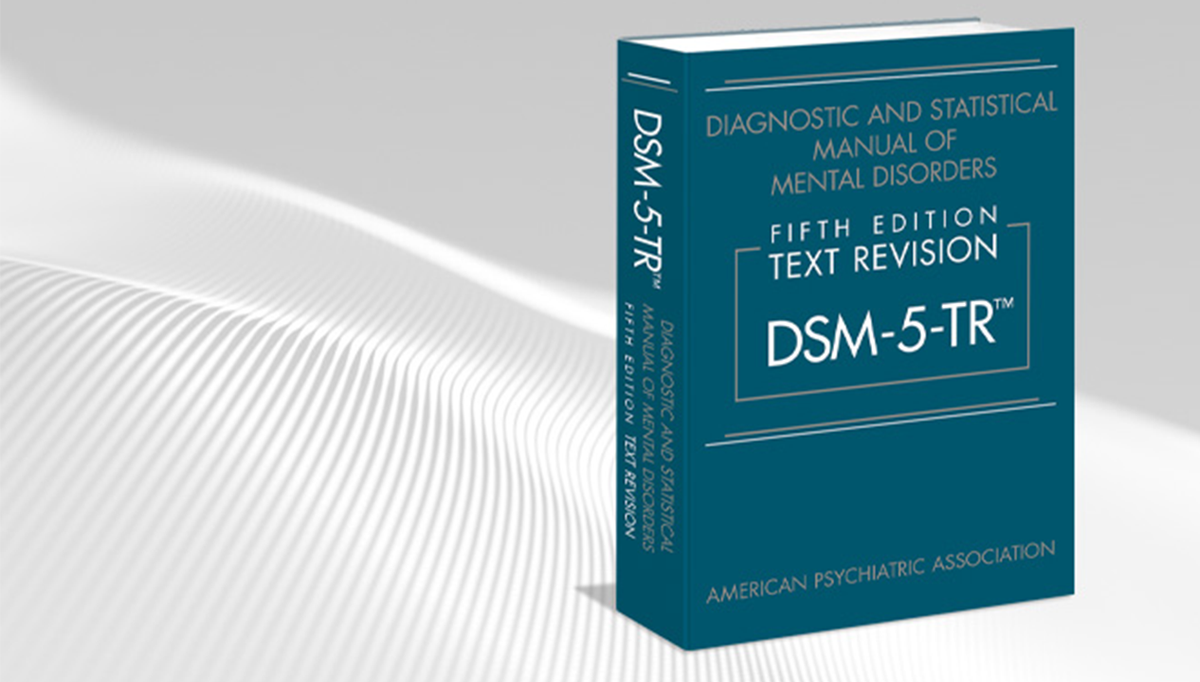
And yet, almost immediately in our training, we are introduced to the Diagnostic and Statistical Manual of Mental Disorders (DSM) as the central framework for understanding psychological distress.
The DSM is often presented as the authoritative map of mental illness: a structured system for identifying disorders, guiding treatment, and organizing clinical knowledge. Over time, it becomes deeply embedded in how clinicians communicate, document, and conceptualize their work.
But to understand what the DSM actually does—and what it does not do—it is necessary to examine both how it developed and the assumptions that are often left unspoken in clinical training.
The Reliability Revolution
The modern structure of the DSM largely emerged with the publication of DSM-III in 1980, a turning point in the history of psychiatry.
Prior to DSM-III, psychiatric diagnosis was highly inconsistent. Clinicians from different theoretical orientations often arrived at very different diagnoses when evaluating the same person, raising serious concerns about the reliability of psychiatric classification (Kirk & Kutchins, 1992).
DSM-III attempted to address this problem by introducing operationalized diagnostic criteria. Disorders were defined by specific clusters of observable symptoms and decision rules, rather than by theoretical interpretation.
The goal was not to identify the underlying causes of mental disorders, but to ensure that clinicians could reliably agree on what they were seeing.
In this sense, DSM-III was a success.
Reliability refers to consistency—whether different clinicians arrive at the same diagnosis. But reliability does not guarantee validity.
Validity asks a deeper question: whether diagnostic categories correspond to distinct conditions that exist in nature.
Psychiatric diagnoses remain largely syndromic, meaning they are defined by clusters of reported symptoms rather than by identifiable biological markers or clearly established causes (Horwitz, 2002; Davies, 2013). Despite decades of research, most DSM categories do not yet have clear underlying biological explanations.
This limitation has been acknowledged even within psychiatry itself. The National Institute of Mental Health (NIMH), for example, has noted that DSM diagnoses lack validity in terms of identifying discrete biological conditions, contributing to the development of alternative research frameworks such as the Research Domain Criteria (RDoC), which aim to classify mental health difficulties based on underlying dimensions of functioning rather than symptom categories (Insel et al., 2010).
This has also contributed to ongoing debates about whether mental health conditions are better understood as discrete categories or as dimensional experiences that exist along continua, rather than as separate, bounded disorders (Widiger & Samuel, 2005).
DSM-III succeeded in improving reliability. Whether its categories represent discrete medical diseases remains an open scientific question.
The DSM Is Also an Administrative System
Beyond its clinical role, the DSM also functions as an essential administrative tool within modern healthcare systems.
In most settings, insurance reimbursement requires a particular sequence: symptoms → diagnosis → treatment → billing code. Without a diagnosis, services are often not covered (Kirk & Kutchins, 1992; Levine & Ghezzi, 2022).
Over time, the DSM became the classification system that allows this structure to function. As Kirk and Kutchins (1992) argue, it is not only a scientific document but also an institutional tool that organizes communication among clinicians, insurers, and researchers.
Social work scholars similarly emphasize that the DSM’s role in reimbursement and institutional systems has made it central to clinical practice, regardless of its conceptual limitations (Levine & Ghezzi, 2022).
Recognizing this administrative function does not invalidate the DSM. However, it does complicate the assumption that it exists purely as a neutral, scientific representation of mental illness.
The Usefulness of Diagnosis — and Its Limits
Diagnostic categories can be useful, they help clinicians communicate, coordinate care, guide certain interventions, and provide access to services (Levine & Ghezzi, 2022). For some clients, receiving a diagnosis can even be validating (Levine & Ghezzi, 2022).
But usefulness is not the same as explanation.
Many scholars argue that psychiatric diagnoses function best as descriptive frameworks for organizing patterns of distress, rather than as definitive accounts of why those experiences occur (Horwitz, 2002; Timimi, 2014).
Problems arise when diagnostic labels are treated as though they explain the very experiences they are meant to describe.
When someone says “I am depressed,” the label can begin to feel like a concrete entity—something located inside the person—rather than a shorthand for a complex set of emotional, relational, and environmental experiences. Sociologists refer to this process as reification: when abstract classifications come to be treated as though they were concrete things (Kirk & Kutchins, 1992).
Some critics argue that this is not simply a matter of misuse, but a structural feature of diagnostic systems themselves. From this perspective, psychiatric labels risk functioning as circular explanations—naming a set of experiences without actually explaining them—while shaping how individuals come to understand themselves and their distress (Timimi, 2014).
This can have broader consequences, including reinforcing stigma, individualizing suffering, and obscuring the relational, cultural, and structural contexts that contribute to distress (Levine & Ghezzi, 2022).
Clinicians Often Feel Ambivalent About Diagnosis
These tensions are not lost on clinicians themselves.
Research suggests that many practitioners hold ambivalent attitudes toward diagnosis. While they recognize its utility for communication and administrative purposes, they also express concern that diagnostic systems oversimplify the complexity of clients’ lived experiences (Jensen-Doss & Hawley, 2011).
This ambivalence is echoed in social work literature, which describes a “conflicted relationship” with the DSM—one that reflects both its practical necessity and its conceptual limitations (Levine & Ghezzi, 2022).
In practice, many clinicians use diagnosis pragmatically while relying more heavily on case formulation, relational understanding, and contextual awareness in their actual work with clients.
What the DSM Cannot Fully Capture
Human psychological life is shaped by far more than symptom clusters. Attachment histories, trauma, cultural meaning systems, social environments, structural inequalities, and existential questions all play central roles in shaping distress and well-being.
While the DSM offers a way to classify patterns of symptoms, it cannot fully account for these broader dimensions. Critics have long noted that its medicalized framework tends to prioritize pathology while giving less attention to strengths, context, and the person-in-environment perspective (Levine & Ghezzi, 2022).
In response to these limitations, alternative frameworks have begun to emerge. The Power Threat Meaning Framework (PTMF), for example, shifts the focus from “What is wrong with you?” to questions such as “What has happened to you?” and “How have you made sense of it?” (Johnstone & Boyle, 2018). This approach emphasizes power, context, and meaning-making, offering a more relational and socially grounded understanding of distress.
While such frameworks are not yet widely integrated into mainstream training, their emergence highlights a persistent gap in clinical education: the DSM is often treated as though it provides a comprehensive account of mental health, rather than as a limited conceptual tool.
What Clinicians Should Be Taught About the DSM
Training programs often present the DSM as a definitive map of mental illness—something to be learned, applied, and trusted. What is far less often made explicit are the assumptions built into that map, the limits of its categories, and the institutional forces that sustain its authority.
As a result, many clinicians are taught how to diagnose without being taught how to critically understand diagnosis itself.
A more complete education would frame the DSM as a historically situated, imperfect, and evolving system—one shaped by priorities such as reliability, standardization, and administrative utility, rather than as a fully validated model of psychological suffering.
Clinicians would be better served by being explicitly taught that the DSM is a classification system, not a comprehensive theory; that its categories were designed to improve agreement rather than establish causes; that most diagnoses remain syndromic constructs; and that the manual plays a significant administrative role in healthcare systems. They would also be encouraged to understand that diagnostic categories, while useful, are not explanations and can obscure context when taken at face value.
Emerging critiques and alternative frameworks—from dimensional models to approaches like the PTMF—further underscore the importance of teaching diagnosis as one framework among many, rather than as the definitive account of mental health (Insel et al., 2010; Johnstone & Boyle, 2018).
Without this context, clinicians may internalize diagnostic categories as objective truths, narrowing their understanding of distress and reinforcing individualizing narratives. With it, they can approach diagnosis with greater intention, humility, and flexibility—using it as a tool while remaining grounded in the relational and contextual realities it cannot fully capture.
References
Davies, J. (2013). Cracked: Why psychiatry is doing more harm than good. Icon Books.
Horwitz, A. V. (2002). Creating mental illness. University of Chicago Press.
Insel, T., Cuthbert, B., Garvey, M., Heinssen, R., Pine, D. S., Quinn, K., Sanislow, C., & Wang, P. (2010). Research domain criteria (RDoC): Toward a new classification framework for research on mental disorders. American Journal of Psychiatry, 167(7), 748–751.
Jensen-Doss, A., & Hawley, K. M. (2011). Attitudes of clinicians toward diagnosis and the DSM: A review of the literature. Clinical Psychology: Science and Practice, 18(3), 283–301.
Johnstone, L., & Boyle, M. (2018). The Power Threat Meaning Framework. British Psychological Society.
Kirk, S. A., & Kutchins, H. (1992). The selling of DSM: The rhetoric of science in psychiatry. Aldine de Gruyter.
Levine, A., & Ghezzi, M. (2022). Pedagogical strategies for teaching the DSM: Centering diversity and equity. Advances in Social Work, 22(1), 133–144. https://doi.org/10.18060/25617
Timimi, S. (2014). No more psychiatric labels: Why formal psychiatric diagnostic systems should be abolished. PCCS Books.
Widiger, T. A., & Samuel, D. B. (2005). Diagnostic categories or dimensions? A question for the DSM-V. Journal of Abnormal Psychology, 114(4), 494–504.